Platform comparison
| Platform | YES odds | NO odds | Fee | KYC | Settlement | |
|---|---|---|---|---|---|---|
PolyGram Pick polygram.ink |
0% | 100% | 0% (USDC on-chain) | No-KYC up to $1,500 | USDC, auto via UMA oracle | Open on PolyGram → |
Polymarket polymarket.com |
0% | 100% | 0% | Geo-blocked in US/UK/EU | USDC, on-chain | Open on PolyGram → |
Kalshi kalshi.com |
— | — | Up to 7% per trade | US-only, KYC required | USD | Open on PolyGram → |
Betfair Exchange betfair.com |
— | — | 2-5% commission | Full KYC from first trade | GBP / EUR | Open on PolyGram → |
Manifold Markets manifold.markets |
— | — | Play-money (mana) | None — play-money | Mana (no cash-out) | Open on PolyGram → |
Live odds for Polymarket-based markets come from the Polygon order book. Non-Polymarket venues show attributes only; clicking any row opens the market on PolyGram.
Active sub-markets
| Benjamin Netanyahu | 0% YES | 100% NO |
| Pete Hegseth | 0% YES | 100% NO |
| Any U.S. House member | 1% YES | 99% NO |
| Any U.S. Senator | 1% YES | 100% NO |
| JD Vance | 1% YES | 99% NO |
| Marco Rubio | 0% YES | 100% NO |
Market context
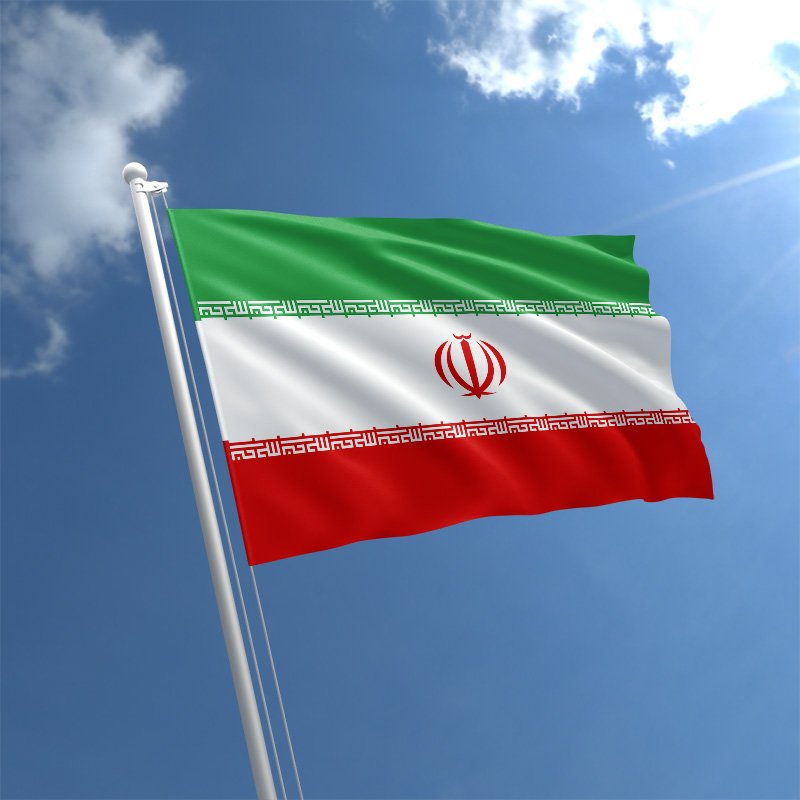
The underlying real-world event is the fragile post-war diplomatic thaw between the United States and Iran following the 2026 conflict, which began with large-scale strikes on February 28. Iranian President Masoud Pezeshkian has just completed his inaugural international trip since the war, landing in Pakistan on June 23 for talks mediated after the breakthrough US deal in Switzerland[1]. This marks a significant shift from the previous isolation, yet the President has not yet entered Iranian territory since the ceasefire, having remained abroad for negotiations.
Historically, visiting heads of state from adversarial nations rarely enter the opposing territory immediately after a ceasefire, preferring neutral ground or third-party mediation to avoid security risks. Comparable cases from the 2025–2026 negotiations show that even after the Islamabad Memorandum was signed remotely on June 17, physical entry into Iran remained suspended due to ongoing hostilities in Lebanon and Israeli strikes on Hezbollah[3]. The current 0% crowd-implied probability aligns with this pattern, as no foreign dignitary has physically entered Iran since the war began, and the diplomatic framework remains a preliminary memorandum rather than a final peace agreement[3].
Traders should monitor the upcoming technical discussions in Switzerland scheduled for this week, as well as any announcements regarding the cessation of Israeli airstrikes in Lebanon, which Tehran has demanded as a precondition for further talks[4]. Vice President JD Vance’s delayed trip to Switzerland and the recent halt in negotiations due to Trump’s threats indicate that the diplomatic window remains volatile[6][5]. The key dependency is the establishment of the de-confliction cell for Lebanon and the communication line for the Strait of Hormuz, both of which mediators from Qatar and Pakistan are overseeing[5]. Any sudden announcement of a foreign leader’s arrival in Iran would be a major outlier against the current trajectory.
Methodology
Methodologically we separate two layers: the live probability (Polymarket mid-price) and the platform attributes (fee, KYC, settlement currency, payment rails). The odds column is filled only where we have clean data — that avoids the made-up numbers that get a network demoted when search engines cross-check against the source venue.
Resolution & payout
Settlement runs on-chain. Polymarket's contract logic separates YES and NO shares as conditional tokens; at resolution the winning share lifts to $1.00 and the losing one to $0. The outcome input comes from the UMA Optimistic Oracle, which secures against bad resolution with a bond + dispute window.
Once finalised, the smart contract pays USDC to the holders' wallets within minutes — no withdrawal fees beyond Polygon network gas. Kalshi settles in USD via CFTC clearance, Betfair in account currency net of commission, Manifold in play-money mana with no cash-out.
FAQ
- Where can I trade this market with the lowest fees?
- On PolyGram, which mirrors the Polymarket order book at 0% fees. Kalshi charges up to 7% per trade; Betfair Exchange takes 2-5% commission on net winnings.
- Is this market available outside the US?
- PolyGram is available in most jurisdictions where Polymarket isn't directly accessible. Polymarket itself is geo-blocked in the US/UK/EU. Always check local regulations.
- What does it cost to trade on PolyGram?
- Zero. PolyGram routes every order to the live Polymarket order book; the only cost is the Polygon network fee, typically under $0.01 per transaction.
- How fast are USDC deposits?
- Polygon credits deposits after 12 confirmations — usually under 30 seconds. Withdrawals follow the same path and land back in your wallet within minutes.
- How reliable are the quoted odds?
- The YES/NO percentages are the live mid-prices of the Polymarket order book. On deep markets they move every few seconds; on thinner ones you'll see short plateaus.
%22%2F%3E%3Cpath%20d%3D%22M%206%2066%20A%2026%2026%200%200%201%2058%2066%22%20fill%3D%22%23E6B98D%22%20opacity%3D%220.9%22%2F%3E%3Ccircle%20cx%3D%2232%22%20cy%3D%2226%22%20r%3D%2222%22%20fill%3D%22%23F5CBA7%22%2F%3E%3Cpolygon%20points%3D%2216%2C18%2020%2C4%2024%2C18%22%20fill%3D%22%23ef4444%22%2F%3E%3Cpolygon%20points%3D%2224%2C18%2028%2C3%2032%2C18%22%20fill%3D%22%23ef4444%22%2F%3E%3Cpolygon%20points%3D%2232%2C18%2036%2C3%2040%2C18%22%20fill%3D%22%23ef4444%22%2F%3E%3Cpolygon%20points%3D%2240%2C18%2044%2C4%2048%2C18%22%20fill%3D%22%23ef4444%22%2F%3E%3C%2Fsvg%3E) and
and%22%2F%3E%3Cpath%20d%3D%22M%206%2066%20A%2026%2026%200%200%201%2058%2066%22%20fill%3D%22%23E6B98D%22%20opacity%3D%220.9%22%2F%3E%3Ccircle%20cx%3D%2232%22%20cy%3D%2226%22%20r%3D%2222%22%20fill%3D%22%23F5CBA7%22%2F%3E%3Cpath%20d%3D%22M%2010%2018%20Q%2016%204%2026%2010%20Q%2020%202%2032%206%20Q%2044%202%2038%2010%20Q%2048%204%2054%2018%22%20stroke%3D%22%23ef4444%22%20stroke-width%3D%224%22%20fill%3D%22none%22%20stroke-linecap%3D%22round%22%2F%3E%3C%2Fsvg%3E)
Trade Who will enter Iran by June 30? on PolyGram
Live order book, 0% fees, USDC settlement in seconds.
Trade on PolyGram →